
Building Stronger Relationships
Through Restorative Practices
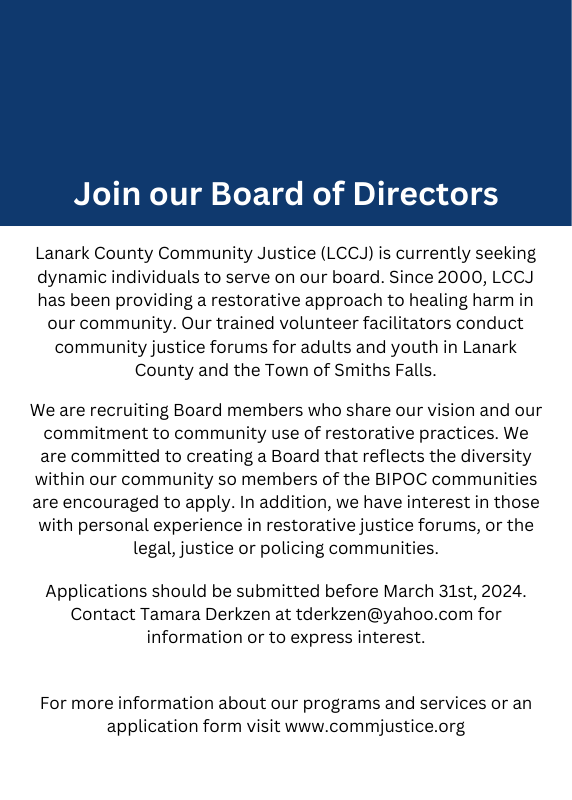
Lanark County Community Justice is a non-profit charity. Our mission is to provide and promote the community use of restorative practices. We bring people together to repair the harm from conflict and crime, build community and strengthen relationships.
Our Programs
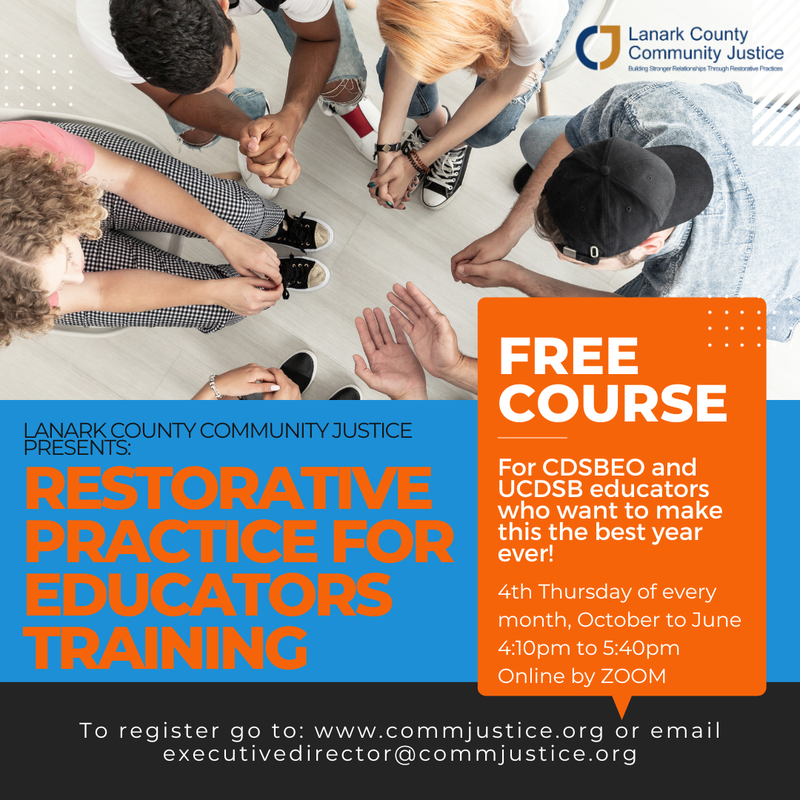
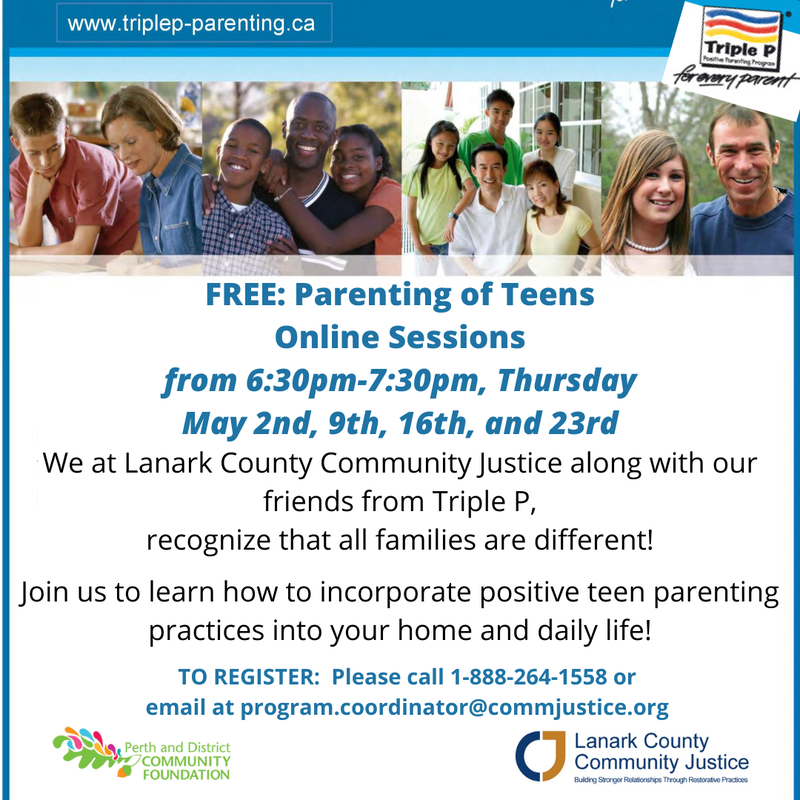
We have proudly served communities across Lanark County and the town of Smiths Falls for over 20 years; facilitating restorative justice forums through our Community Justice Court Diversion Program. Our programs encourage the use of Restorative Practices and help to prevent harm, promote strong, healthy and vibrant connections; foster empathy, emotional literacy, resilience; and facilitate peaceful conflict resolution.